German New Year traditions: a shared table and Dinner for One
 German New Year traditions: a shared table and Dinner for One
By Moderion ·
Raclette, fondue and an annually repeated comedy sketch suggest a useful New Year question: what is worth keeping?
German New Year’s Eve, known as Silvester, has room for a slow meal and a very familiar television sketch. Raclette and fondue feature in descriptions of the evening, while Dinner for One returns to television year after year. Familiarity is part of the celebration. [1][2]
A meal that keeps people at the table
Deutschland.de describes raclette and fondue among the foods associated with Silvester. Both put some of the preparation into the meal itself. Rather than serving everything at once, people cook small portions while they sit together. [1]
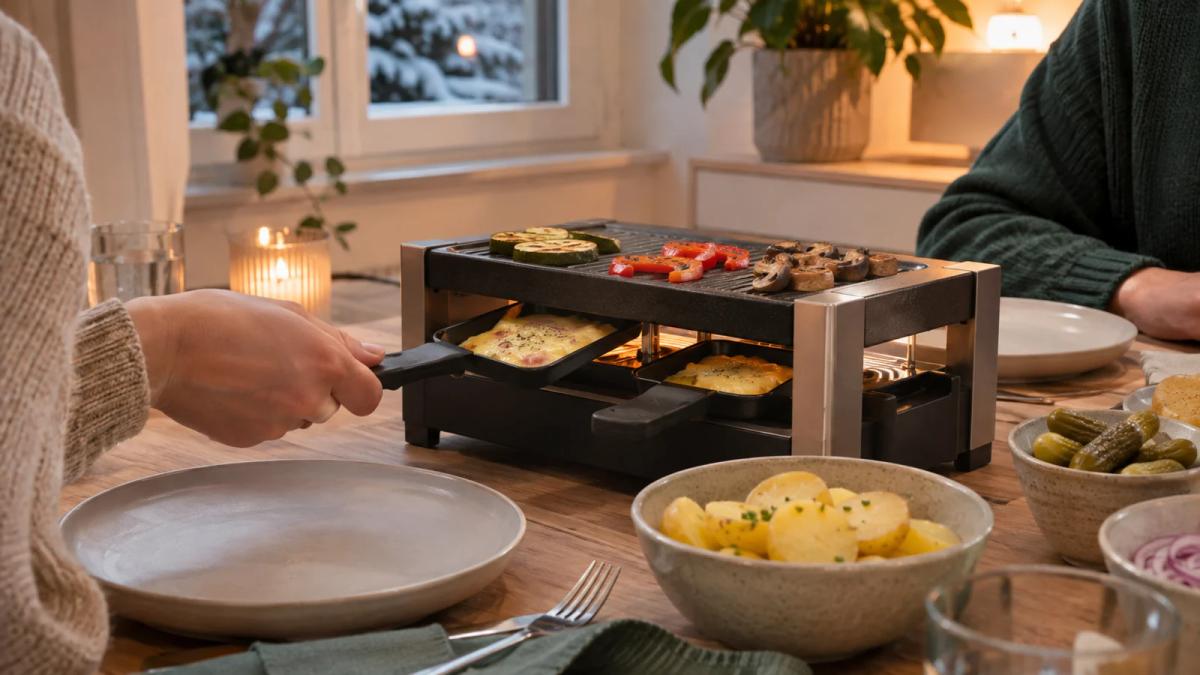
That makes the table a useful place to begin the story. The occasion does not depend only on what happens when the clock reaches midnight. There is an evening to spend with other people first, with time for the conversations that a hurried dinner can squeeze out.
The same source lists lucky charms such as pigs, four-leaf clovers, ladybirds and horseshoes. These objects belong to the hopeful side of the occasion: little symbols offered at a moment when nobody knows what the next year will bring. [1]
Why the same sketch comes back
NDR presents Dinner for One as a Silvester television classic. The English-language comedy follows Miss Sophie’s birthday dinner, with her butler James standing in for her absent guests. The broadcaster’s archive includes the sketch, its dialogue and background on the performers. [2]
For people who return to it, knowing the scene already is part of the point. The programme does not need a new premise each December to belong to the evening. Its annual return is a useful counterpoint to the idea that a new year must begin with a completely new version of yourself.
Keep something on purpose
You might think of a meal with friends, an hour outdoors or a conversation that helps you see beyond work. Before choosing what to change, name one existing part of your life that deserves protection.
Then look at what makes it possible. Does someone organise the gathering? Does it happen only because an evening is kept free? Does it disappear whenever work gets busy? Keeping something can require a decision just as much as starting something new.
You do not need to protect every repetition. Some commitments may have outlived their purpose. Separating what you choose to keep from what you continue out of obligation is a useful place to begin.
Sources
- [1]German holidays explained: Silvester · deutschland.de
- [2]Dinner for One: Alles zum Silvester-Klassiker beim NDR · Norddeutscher Rundfunk (NDR)
 New Year traditions in Italy: lentils, luck and intentions for 2027
 Czech New Year traditions: lentils, luck and a first meal
 New Year traditions in Ireland: bread, belonging and a fresh start