Polish New Year heritage: the small dough animals of Kurpie
 Polish New Year heritage: the small dough animals of Kurpie
By Moderion ·
In Poland’s Kurpie region, animal-shaped breads carried wishes for a household’s future. Their story belongs to a wider winter holiday season.
One of Poland’s distinctive winter holiday customs takes the form of small dough animals. In the Kurpie region, byśki and nowe latko carried wishes for health, abundance and a household’s future. They belong to the season from Christmas to Epiphany, including the turn of the year. This is regional heritage, not a custom practised across every Polish home. [1][2]
Animals shaped from dough
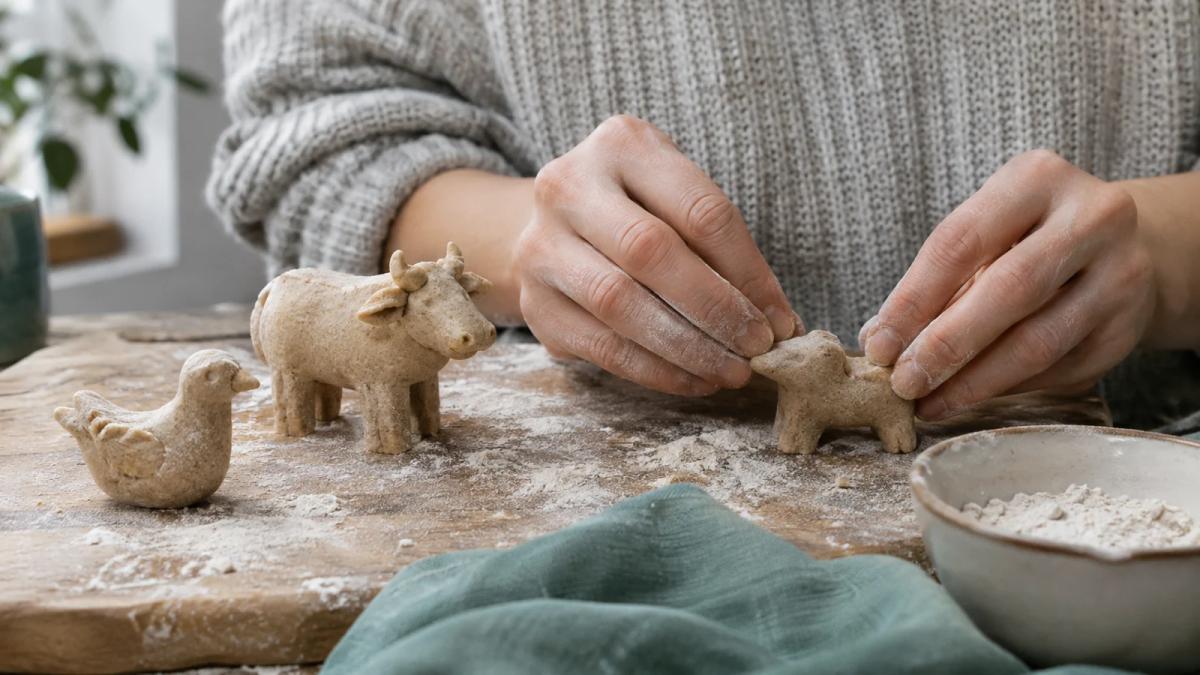
Culture.pl describes byśki as individual animal figures and nowe latko as a ring arranged with animals around a human figure. Made from flour and water, these objects connected hopes for the coming year to the animals and people of rural life. Their forms were specific rather than abstract: a household’s fortune could be imagined through its farm and surroundings. [1]
The figures could include farm animals or creatures of the forest. The heritage institute describes households choosing forms connected to their own animals and surroundings. A wish for abundance was represented by something recognisable in daily life. [2]
A custom that changes while it continues
Poland’s National Institute of Rural Culture and Heritage describes the objects’ former role in beliefs about protection, health and prosperity. Some families hung them in a special place at home; in other accounts, children received the figures. The institute also describes their continuing life as a family craft and regional gift after their earlier magical meaning weakened. [2]
The season is broader than New Year’s Eve alone. Treating the figures as something all Poles make on 31 December would lose both their regional identity and their place in the Christmas-to-Epiphany calendar.
They are also more than an unusual item to eat. In the institute’s account, some historical examples were kept as symbolic objects. Understanding what people did with them helps explain why the shape and the making mattered.
Give prosperity a more specific meaning
For you, a good year might mean financial breathing room, time with family, a place you feel connected to or enough energy for life outside work. Those answers lead to different decisions. Naming the one that matters most can be more useful than wishing for an undefined better year.
Choose one thing that would help preserve it in January. It might be a conversation about shared time, a decision about spending or an evening kept free.
Sources
- [1]From Pagan Roots to Living Heritage: Unusual Polish Christmas Customs · Culture.pl / Adam Mickiewicz Institute
- [2]Byśki i nowe latko: pieczywo obrzędowe na Trzech Króli · Narodowy Instytut Kultury i Dziedzictwa Wsi
 New Year traditions in Italy: lentils, luck and intentions for 2027
 Czech New Year traditions: lentils, luck and a first meal
 New Year traditions in Ireland: bread, belonging and a fresh start