Spanish New Year traditions: twelve grapes at midnight
By Moderion ·
Spain’s twelve grapes turn midnight into a fast, shared ritual. The tradition is about good luck for the coming year, not twelve separate resolutions.
At midnight on New Year’s Eve, one of Spain’s best-known traditions happens in twelve quick beats. People eat one grape with each clock chime, usually while following a televised countdown with family or friends. Spain’s official tourism site describes the twelve grapes as the most anticipated moment of the evening. [1]
A ritual built around the clock
The custom is tightly connected to the midnight chimes. Each grape is eaten in time with one chime, so the ritual is less reflective than it might sound on paper. It is fast, social and slightly difficult to complete neatly. [1]
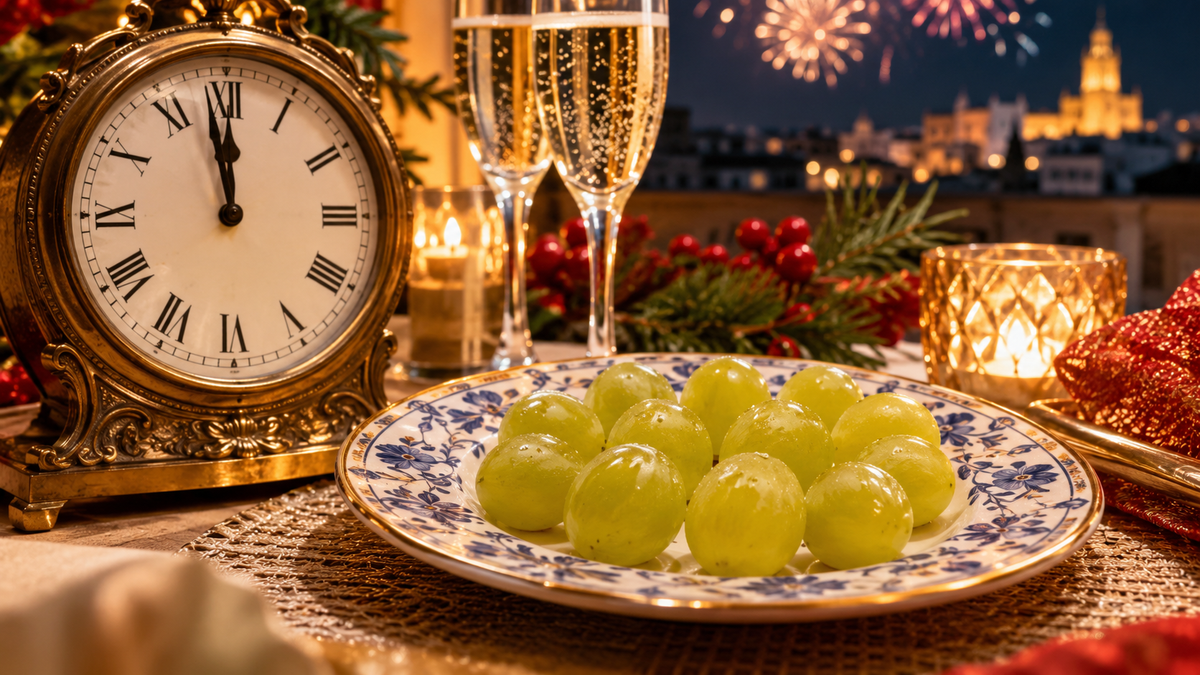
That physical rhythm is part of what makes the tradition memorable. Instead of quietly writing a list, people share the exact same moment and action. The year changes in public, with a small task everyone can recognise.
Good luck is not the same as a plan
The grapes are a good example of how New Year traditions can express hope without pretending that hope itself changes everyday life. A ritual can mark a boundary between years. It cannot decide what happens after the celebration.
This is where resolutions often become harder. It is easy to name what you want on 31 December. It is much harder to make room for it on an ordinary Tuesday when work, admin and other obligations are already competing for attention.
Keep the fresh start, reduce the pressure
A useful New Year review does not need twelve goals. Start with the areas that matter most and ask where change is actually needed. Some parts of life may already be stable. Others may be important but neglected. A smaller number of deliberate priorities is easier to carry into January.
For example, if health matters but work has repeatedly taken the available time, the useful decision is not simply “exercise more”. It is to define what realistic movement would look like this month, then notice whether everyday life supports it.
Sources
- [1]New Year's Eve in Spain · Spain.info